

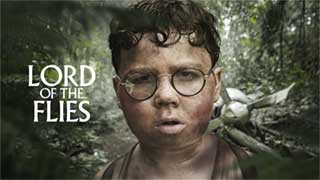












From the creator of Netflix’s Adolescence and Enola Holmes comes Lord of the Flies, Jack Thorne’s BBC miniseries adaptation of William Golding’s horror novel. Netflix has excited thriller enthusiasts with suspenseful dramas like His & Hers, Runaway, and Trinity, with Lord of the Flies bringing swarms of fans of the book and psychological thrillers. Much like the novel, the miniseries, with its own additional exploration into some character backstory, explores the nature of evil as well as the impact of fear. Alluding to the vile capability of men in war, the BBC’s Lord of the Flies reveals what can occur when young boys are put in high-stakes situations with no adults to control what they do.
The show begins differently from the novel, with Piggy (David McKenna) being the first character we meet. He is alone and wandering in the woods. It’s certain he’s aware of what happened, but it’s not until Piggy wanders upon the wreckage of a plane that the reason for his being there is discovered. In the book we meet Ralph (Winston Sawyers) first, but here Ralph is the second character introduced. The two meet and try to figure out where they are and who else survived the plane crash. As they wander together, they enter the beach, realizing they are on an island. Piggy uses a conch shell he finds to summon anyone else who may be alive. Upon having Ralph blow the conch, a swarm of boys, ages 6-12, converges on the beach. The choir boys are last to arrive.
They elect the chief to be Ralph; Jack (Lox Pratt), the leader of the choir boys, is disgruntled. Craving power, Jack decides that the choir will be hunters and he will be the leader of them. Ralph, Piggy, Jack, and another choir boy, Simon (Ike Talbut), go explore the island in hopes of finding adults. They come upon the dead body of the pilot. They push him off the cliff by Jack’s insistence. From then on, Ralph leads efforts for everyone to be found and rescued by getting a signal fire started. But when Jack and his hunters take over, it gets out of control. A boy goes missing in the fire. From here tension rises in the story as Jack wants to lead, be the best, and focus on having fun while Piggy and Ralph assert that being found and staying alive are priorities. As the show continues, they miss a chance at being rescued, the boys develop fear of a beast in the forest, and aggression increases as the boys leave morals and sanity behind to indulge in reckless destruction and violence.
The show boasts an eerie realism. Through the blurred, distorted camera lenses, choir music and uncomfortable still shots of the deserted boys, the show operates as a psychological horror. Audiences are left with the unsettling feeling of witnessing as the once-innocent children become monsters who commit unfathomable acts of violence.
The show deviates from the novel by examining the home lives of the boys. Thorne makes masculinity a major theme in the show. Piggy’s, Ralph’s, Simon’s, and Jack’s relationships with their fathers (or lack thereof) are repeatedly implied, providing understanding of how their personalities came to be and why their responses to fear, intimidation and pressure are as they are.
This contrast of childish exuberance and violent terror stirs and moves readers quickly from nostalgic smiles to sobs. The series depicts the evolution from boy to beast before the backdrop of a beautiful jungle that becomes all the more spine-chilling as the plot progresses.
This series superbly adapts the ominous tone of the novel into a more foreboding tale about evil through a group of lost English boys. It’s easy to enjoy the characters and have concern, especially as more is told about their lives before the plane crash. The added character exploration provides more in-depth insight into the themes of masculinity, ego and fear Thorne examines in the show.
In staying true to the novel, this is a production for the horror enthusiast and the weaker watcher alike, as it was made for younger audiences but still carries a mature theme. The pacing and style changes made to adapt William Golding’s Lord of the Flies into the BBC production are now only made for suspenseful and commanding televsion.