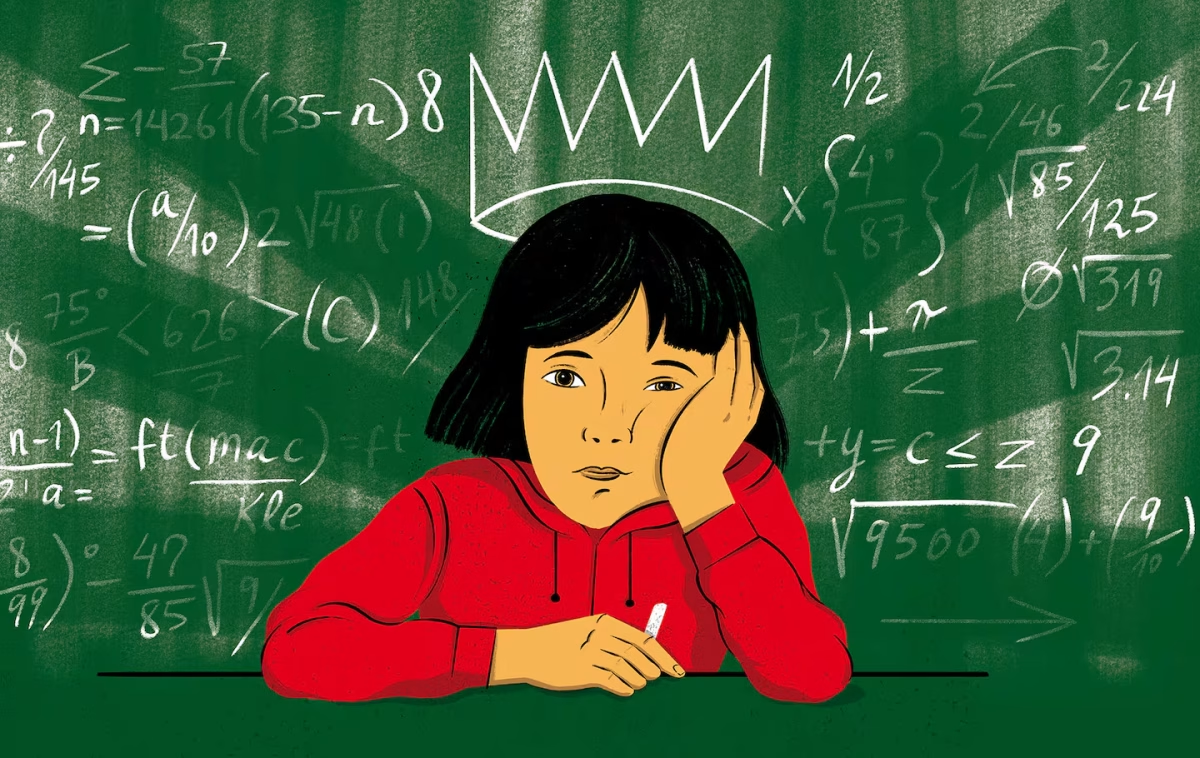
























Sleep deprivation has become an increasingly normalized feature of student life, embedded within a broader culture that awards achievement, efficiency and constant academic attention. In contemporary academic environments, rest is often subordinated to productivity as students navigate heavy workloads, extracurricular demands, employment and social obligations within tightly compressed schedules. Navigating these pressures does not simply require strong time management skills; in fact, it seems that the only way to uphold this standard for students is to lose out on sleep.
Many students feel compelled to sacrifice sleep in order to keep up with academic and extracurricular demands that extend far beyond the classroom. Modern high school life is often structured around a dense schedule that includes advanced coursework, standardized test preparation, internships, athletics, clubs, volunteer work and part-time employment. These commitments are frequently viewed as necessary for college admissions and future career opportunities, creating a sense that every available hour must be used productively. As a result, nighttime becomes the only uninterrupted period for completing assignments or preparing for exams.
However, this approach overlooks a basic human requirement: Adolescents need roughly eight to nine hours of sleep for healthy cognitive and emotional development. A multitude of students do not get nearly enough (about 87%, according to the National Sleep Organization). The effects of this sleep deprivation are significant. Sleep supports memory, attention regulation and the basics of human functioning. When sleep is consistently reduced, these processes are disrupted, and students experience measurable declines in cognitive performance. Sustained attention becomes harder to maintain, information is retained less effectively, and complex problem-solving requires greater effort. Academic tasks that depend on creativity or critical reasoning become especially difficult because the brain is operating under fatigue. Ironically, many students attempt to compensate by extending study hours, when sleep deprivation is the chief reason for the academic decline. In the grand scope of things, how is a student meant to manage their time with the workload given? The only logical way seems to be pushing into the night. Performance declines in such cases reflect the effects of chronic sleep loss rather than insufficient effort or ability.
Chronic sleep deprivation undermines both intellectual performance and emotional stability, weakening attention, memory and the capacity for sustained reasoning. These effects expose a structural tension within modern education, where expectations of constant productivity often conflict with the biological requirements for effective learning. Addressing this imbalance requires a cultural and institutional shift that prioritizes sustainable academic practices and acknowledges sleep as foundational to achievement rather than secondary to it. Without such a reorientation, student success will continue to be pursued at the expense of the very conditions that make it possible.