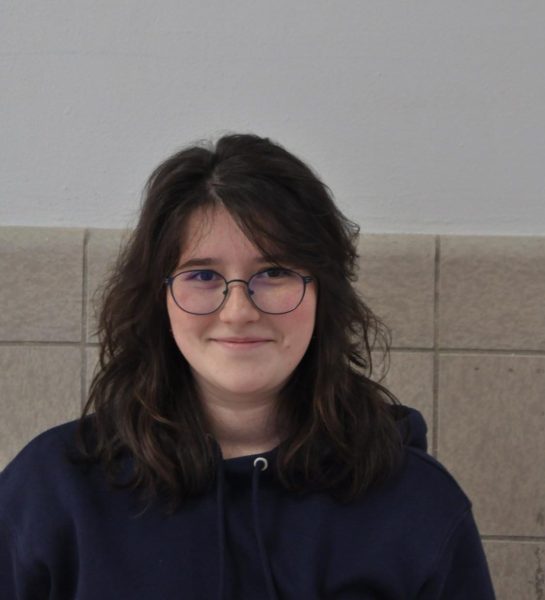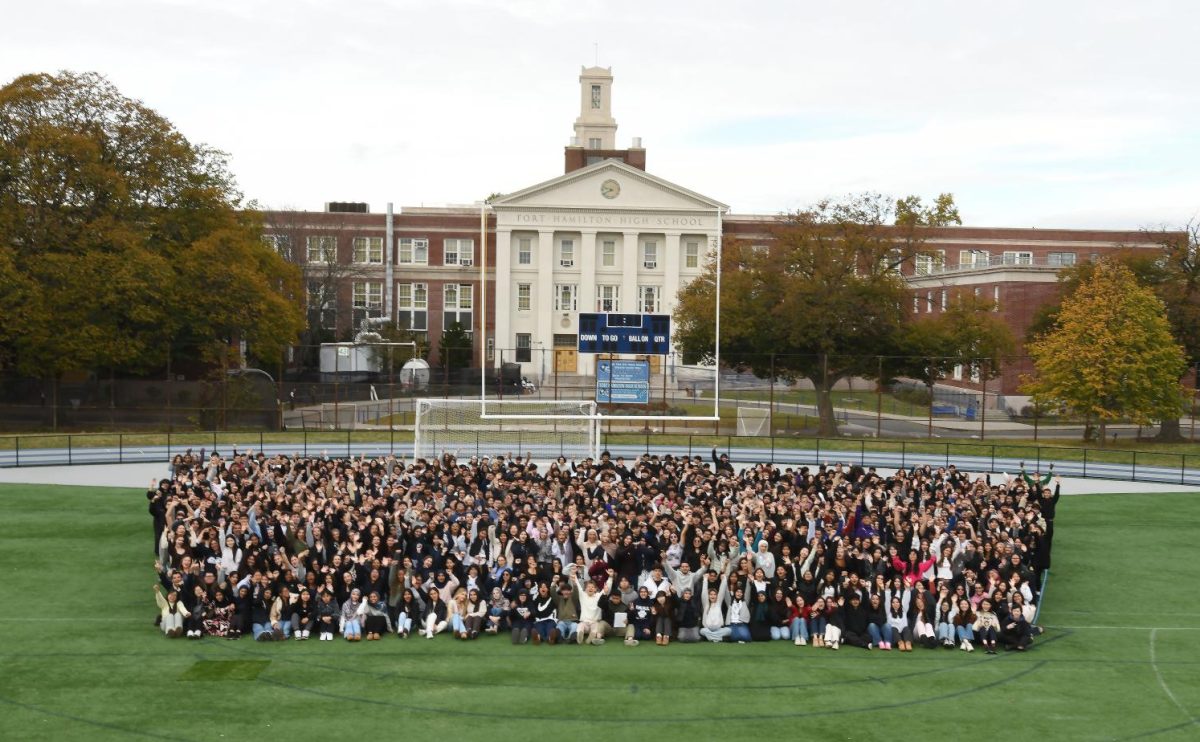
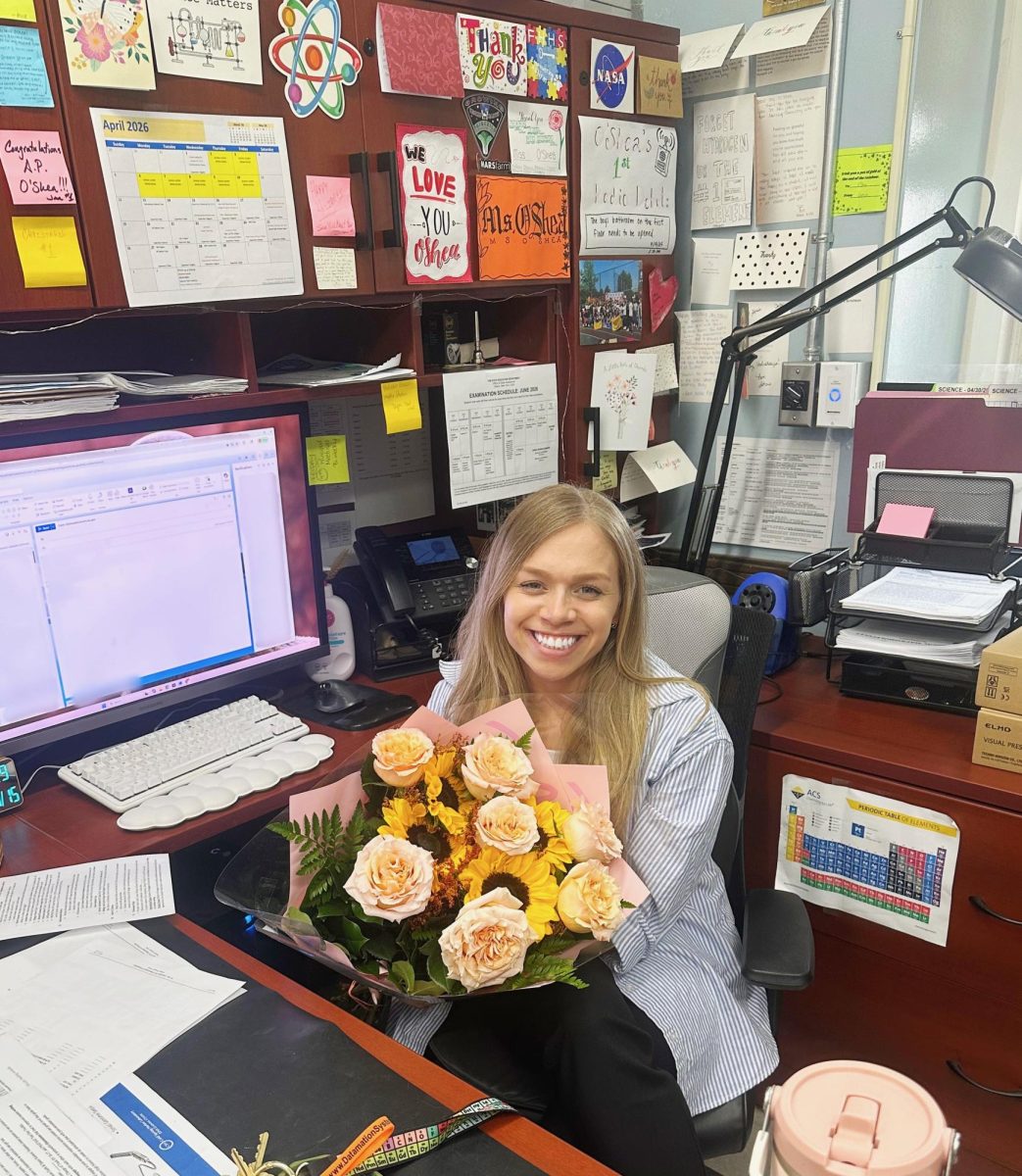
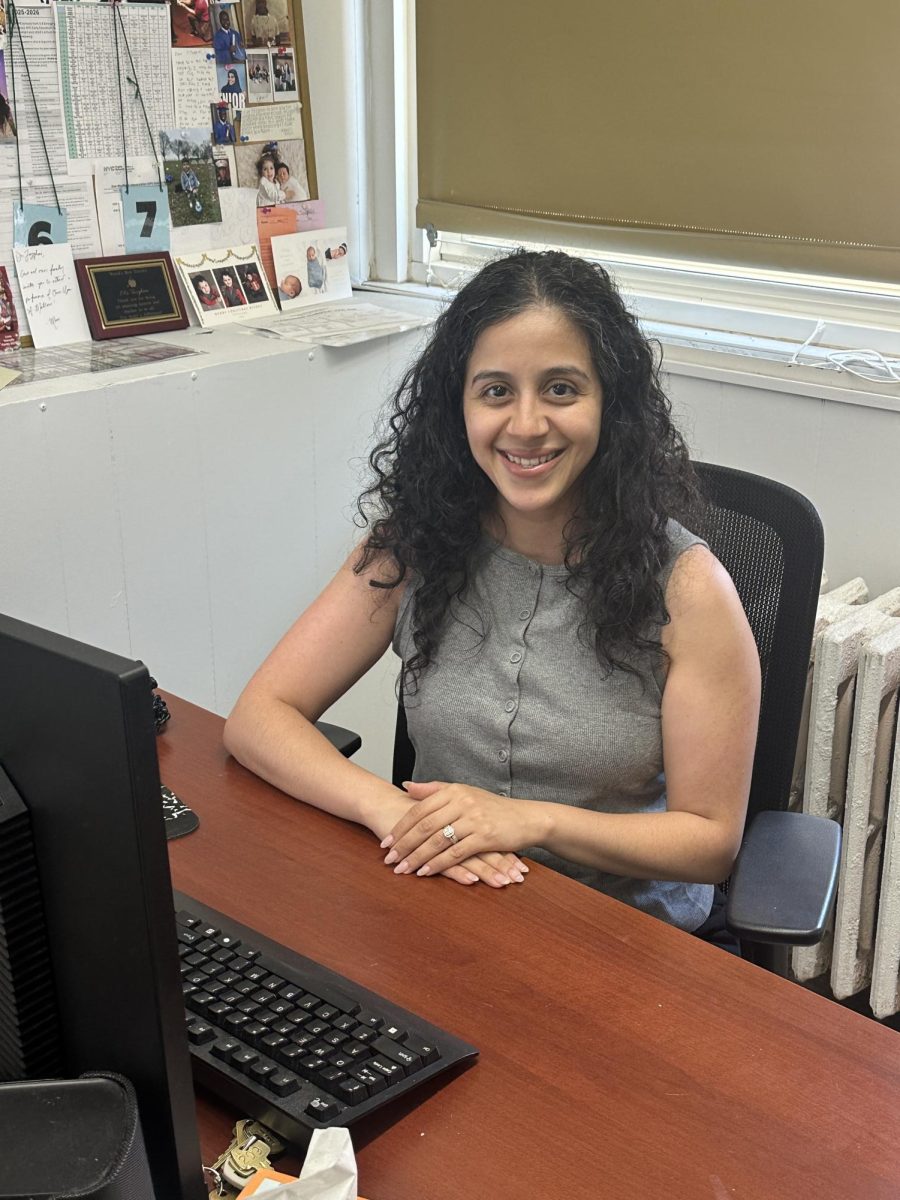









At Fort Hamilton High School, some educators do more than teach; they help shape the spirit of the school itself. For Ms. O’Shea, Fort Hamilton’s newest Assistant Principal of Science, that connection runs deep.
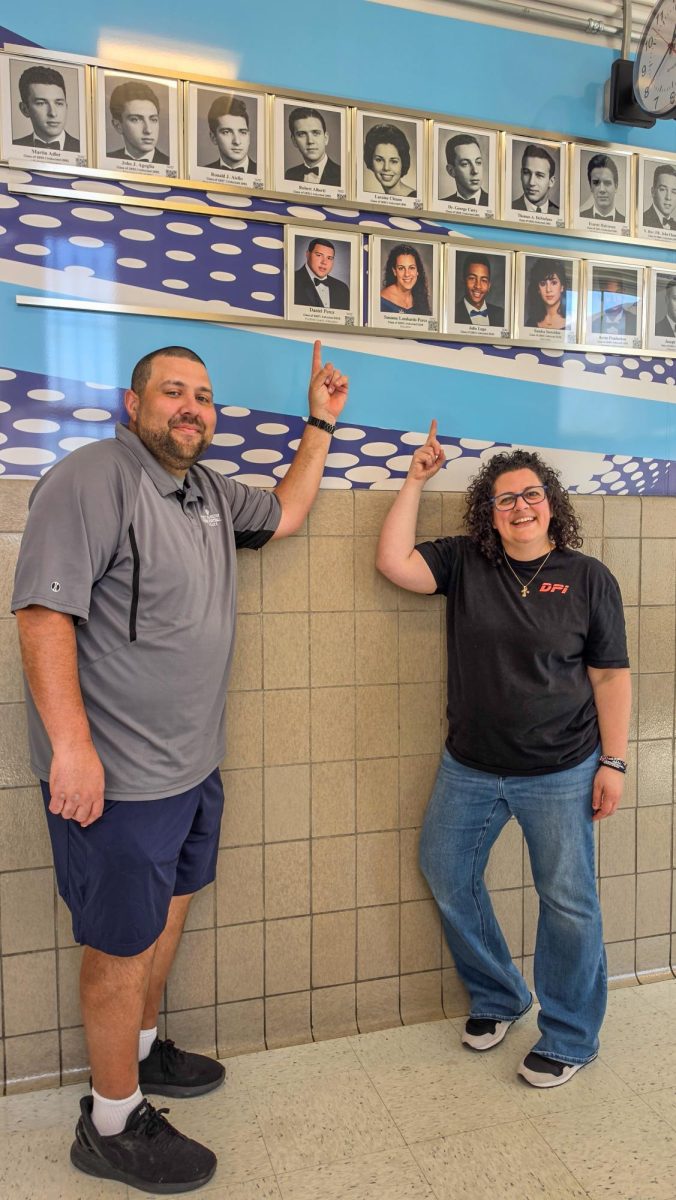
Growing up in Bay Ridge and later returning to Fort as an educator, Ms. O’Shea’s relationship with the school has always been deeply personal. What began as the place that shaped her own academic journey eventually became the place where she would dedicate her career, first as a chemistry teacher and now as the Assistant Principal of Science. For her, leading the department is more than a professional achievement; it is a meaningful way to give back to the community that first inspired her love of science.
Ms. O’Shea’s path into chemistry began with a fascination for the subject, which she saw not as a list of formulas, but as the foundation of science itself.
“As a student, I viewed chemistry as the foundational science because it bridges physics, earth science and biology through the study of matter and change,” she said.
Chemistry, for Ms. O’Shea, explained both the visible and the invisible: the things we touch, see and interact with every day, as well as the particles and processes that operate beneath the surface. That sense of connection is what made her want to teach it.
Ms. O’Shea carried that curiosity into the Teacher Education Honors Academy at the College of Staten Island, where she prepared for a career built around student-centered, inquiry-based learning. There, she began to see classrooms as places of discovery, where students could ask questions, test ideas and make meaning rather than simply absorb information. Science, in her view, was not meant to be passive. It was meant to be explored, questioned and lived.
In her own classroom, that vision came to life in vivid ways. Students created banana and mint scents through esterification labs, watched clear liquids turn into bright yellow precipitate, and made tie-dye shirts, ice cream, bath bombs, candles, and even set off the “elephant toothpaste” experiment through a pumpkin during Halloween. These lessons were engaging, but they were also carefully designed. They reminded students that chemistry is not limited to a textbook; it is instead visible in everyday life, in the way ordinary materials transform and in the surprise of seeing something familiar in a completely new way.
Some of Ms. O’Shea’s most cherished memories come not from any single experiment, but from the way her classroom felt day after day. Saturday Academy became one of those spaces. More than fifty students would gather early in the morning, and over time, what could have felt like an extra class became something else entirely: a shared experience, even a kind of family.
“It began to feel like a routine and a family,” she said. “Despite the early mornings, there was always energy, laughter, and a strong sense of community.”
The same sense of connection appeared during the Growing Beyond Earth project, when students worked on real scientific inquiry tied to NASA research and spoke directly with scientists. Those moments, to her, showed that students rise when they are given the chance to see science as something real and meaningful.
Even while teaching, Ms. O’Shea was already moving into leadership roles. For years, she took on responsibilities beyond her own classroom, serving as the science department assistant and as the Chemistry Teacher Team Leader.
“Earlier in my career I did envision myself moving into a leadership role such as assistant principal,” she said, and that vision became clearer as she helped coordinate departmental work, support communication between teachers and organize laboratory demonstrations aligned with curriculum goals. Leadership, for her, was never a departure from the classroom. It was a different way of staying close to it.
Ms. O’Shea’s perspective also expanded through opportunities outside Fort. A National Science Foundation scholarship allowed her to travel to Russia and Morocco, where she taught chemistry lessons and met with educators, parents, policymakers and students. Those experiences broadened her understanding of education and showed her that effective teaching looks different in different places, yet always depends on reflection, collaboration and adaptability. They deepened her belief in the importance of listening, learning and staying open to growth.
“Transitioning from teaching chemistry and AP Chemistry to serving as Assistant Principal of Science has significantly broadened my perspective,” she said. Where her focus once centered on the students in front of her, it now includes the entire science program: the way curriculum is built, how teachers are supported and how students move from one level to the next. She thinks about the department as part of a larger system, where every decision, big or small, shapes learning, relationships and school culture.
That wider view informs the way she leads. She describes her style as collaborative, supportive and student-centered. Rather than standing apart from teachers, she works alongside them, making herself visible in classrooms and approachable in conversation.
“I prioritize visibility and accessibility,” she said, noting that classroom walkthroughs are not just about evaluation, but about trust, feedback and celebration. She believes that the strongest departments are built on trust, open communication and shared responsibility.
One of Ms. O’Shea’s major priorities is strengthening the connection between science and mathematics. To her, the two subjects are deeply intertwined. In chemistry, students must constantly use math to balance equations, calculate concentrations and interpret data.
“I believe it is essential for students to understand that these disciplines are not isolated subjects,” she said.
By encouraging interdisciplinary collaboration, she hopes to give students a more unified, thoughtful understanding of STEM, one that reflects how these fields work together in the real world.
Ms. O’Shea’s advice to students is grounded in the same belief. Chemistry, with its abstract ideas and complex problem-solving, often feels overwhelming. She reminds students that struggle is not a sign of failure.
“Struggle is not a sign of inability, but a natural and necessary part of learning science,” she said. She encourages students to break problems down, ask questions and stay committed to the process. Her message is clear: progress comes through persistence, and confidence grows with practice.
When asked to describe the Science Department in one word, she answered without hesitation: “Collaborative.” The word captures not only how the department functions, but the culture she hopes to nurture – where teachers share ideas, support one another and work together toward common goals.
For Ms. O’Shea, becoming Assistant Principal of Science is not the beginning of a new chapter. It is the continuation of a story that started years ago at Fort Hamilton. From student to teacher to leader, her path circles back to the school that first inspired her. Science, community, and care for students have remained at the center of everything she does. At Fort, that constancy matters. It is what turns a school into a place of belonging and what makes leadership feel, in every sense, like coming home.